Walking is the great equaliser
Walking serves as the great equaliser in this context. I don’t need to hone a specific skill to take part in these daunting events. I simply have to engage in my daily routine, but for longer.
Also published on my Substack, Wombat Safari
I read Bill Bryson’s A Walk in the Woods (1998) while recovering from surgery. It might be the funniest book I’ve ever read. Laughing was incompatible with my recovery, so my memory of reading the book revolves around trying to suppress my laughter.
The book recounts Bryson and his friend's attempt to walk the 3,540 km Appalachian Trail, which spans 14 states in the eastern United States. A thru-hike is not for the faint-hearted or the unprepared. Eventually, Bryson completed about 40% of the trail, which should not be underestimated.
When Bryson attempted the trail in 1996, successful thru-hikes were around 10%; today, that figure is closer to 25%. This difference reflects the trail running/walking growth over the years and the trail walking community's preparation, commitment, and experience.
Bryson’s book was a novelty for me in 1998. Trail hiking and walking were not the industries they are today.
It is more accurate to refer to the modern version as trail running. However, many individuals run or quickly walk 50 km or a miler (100 miles). The growth in participation has been astonishing. For example, in Australia, participation in the Ultra-Trail Kosciuszko has nearly doubled. In 2022, 1,800 runners participated in the event, which increased to 2,800 in 2023 and 3,100 in 2024.
My experience of these races is that a broad mix of people and abilities get involved. Many are there for the physical and mental challenge, the often-spectacular views, the travel, the well-being benefits, and the community.
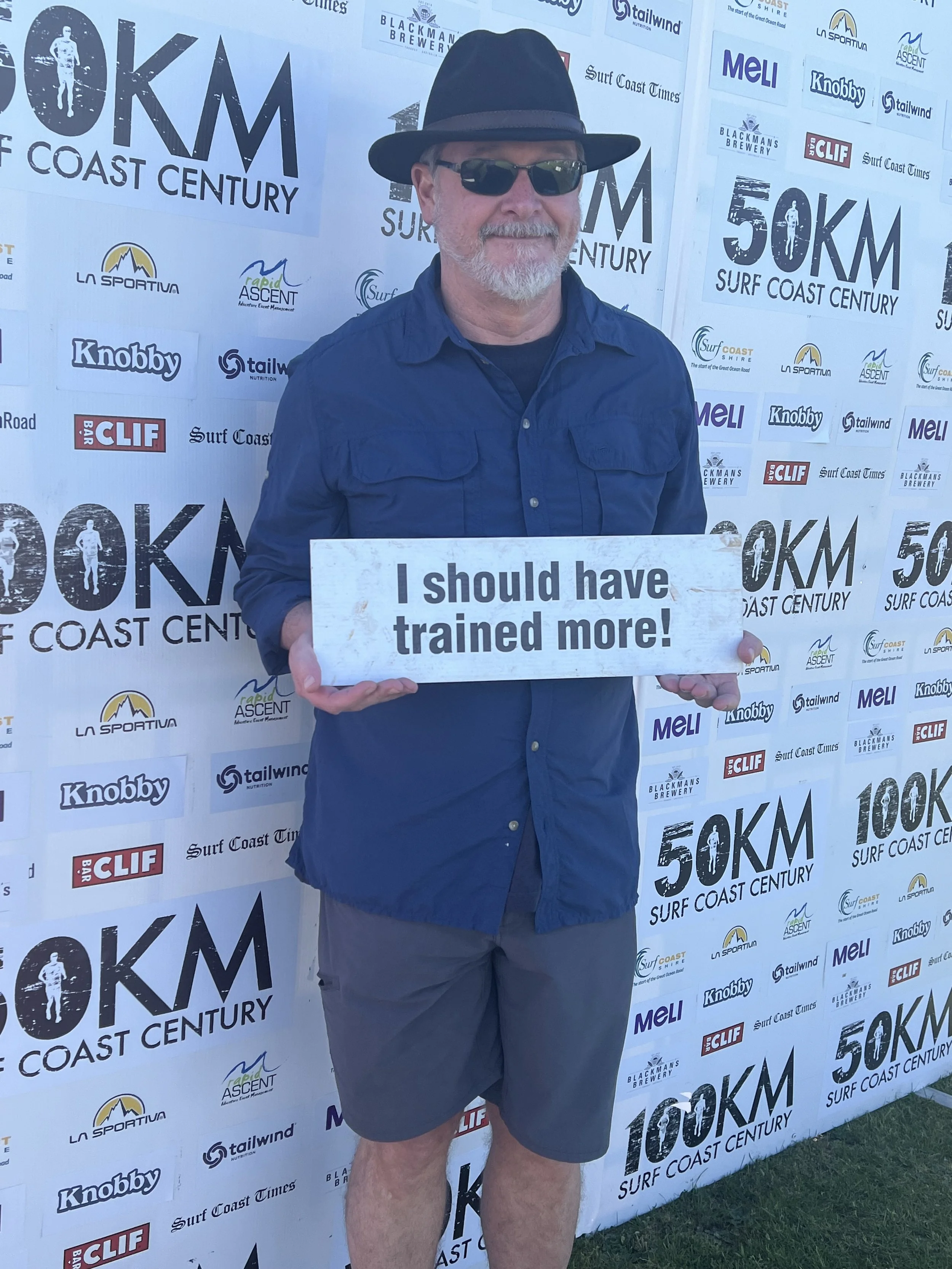
Having completed 50 km (mostly walking), my experience was entirely positive. Bizarrely, I am now quietly confident that I could walk 50 km if called on. It is reassuring to know that (or at least think I know that).
With its rising popularity, the distance of these events has also expanded. A number of them now surpass 100 miles. The Montane Winter Spine Race is promoted as the harshest endurance race in Britain. Competitors navigate 426 km along the Pennine Way in winter conditions. For many participants, the personal challenge is the primary draw.
Walking serves as the great equaliser in this context. I don’t need to hone a specific skill to take part in these daunting events. I simply have to engage in my daily routine, but for a longer duration. Anyone who can walk, is curious about the challenge, and is willing to try can join in.
The duration of these events will continue to extend, with top participants tackling extreme distances in severe conditions. For most of us, a demanding walk is enough.
Cheryl Strayed’s memoir, Wild, recounts her solo trek of 1,760 km along the Pacific Crest Trail, which was made into a film in 2014. Like Bryson, Strayed embarked on her adventure without adequate preparation for long-distance hiking. Nevertheless, her story shows how moving forward one step at a time can be challenging yet ultimately rewarding.
Both Bryson and Strayed demonstrate that our true competition is with ourselves.
