A genius for sauntering
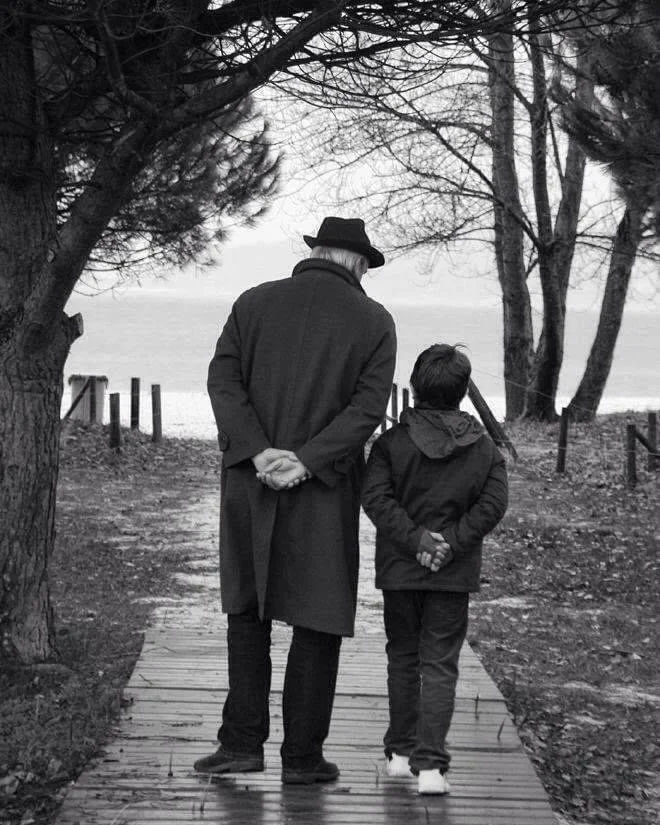
In a world where our attention is being treated as a resource to be captured, caged, commodified, and mined, sauntering is a word whose time has come.
Also published on my Substack, Wombat Safari
The abundance of walking synonyms hints at how central it is to the human experience. We wander, roam, or pace to signal intent; we slink, stagger, or lurch to express emotion. We tread, clamber, or stomp—each verb suggesting how we move, where, and why.
Walking is never just walking. It is mind and body in motion.
I was particularly drawn to walking as sauntering, that slow and soulful perambulation celebrated by Henry David Thoreau. In his 1862 essay Walking, Thoreau writes:
“I have met with but one or two persons in the course of my life who understood the art of Walking, that is, of taking walks,—who had a genius, so to speak, for sauntering…”
For Thoreau, the saunterer is no mere idler. He romanticises the figure of the medieval pilgrim, one who roams the countryside not aimlessly but with a sacred destination in mind. Thoreau speculates that saunter might have originated with those who took pilgrimages to the Holy Land, the sainted land: sainte terre. However, he suggests that it could also come from sans terre, meaning for Thoreau, “having no particular home, but equally at home everywhere.”
Saunter has an unclear origin. It seems to have first appeared in the 1600s, likely originating from a 1500s meaning of “to muse, to be in reverie.” However, as time passed, the word acquired a more negative connotation. By the 18th century, to saunter implied wasting time and lacking seriousness or industriousness. Thus, a leisurely walk became seen as a moral deficiency.
This moral framing can be traced to the influential thinkers of the Enlightenment. In Some Thoughts Concerning Education (1693), John Locke laments “the sauntering humour” in children. He warns fathers to watch for signs of a sauntering temper—an affliction that could stunt intellectual development. To saunter was to drift, and to drift was to fall behind.
Adam Smith, writing less than a century later in The Wealth of Nations(1776), embeds this suspicion of sauntering into the logic of economic productivity. He critiques the inefficiencies of farmers and craftsmen who must shift between tools and tasks, writing:
“The habit of sauntering, and of indolent careless application… renders him almost always slothful and lazy, and incapable of any vigorous application, even on the most pressing occasions.”
Yet Smith, perhaps unknowingly, presents one of the strongest arguments for sauntering. Later in that same chapter, he recounts a tale of a young boy assigned to operate a valve on a steam engine. Wanting more time to play, the boy cleverly devised a way to automate his task. His desire for leisure resulted in one of the machine’s greatest enhancements. It’s a curious paradox: the instinct to saunter—stepping away, musing, and playing—fuelled innovation.
What, then, if sauntering is not a sign of laziness, but a pathway to insight? What if, as Thoreau implies, a genius for sauntering signifies a genius for observation, slow noticing, and allowing thoughts to unspool at the pace of footsteps?
Reclaiming “saunter” isn’t an indulgence in idleness but a focus on a purpose that resists haste and demands presence.
In a world where our attention is being treated as a resource to be captured, caged, commodified, and mined, sauntering is a word whose time has come.
Google’s Ngram Viewer reveals that the usage of “saunter” peaked in the mid-19th century, just as industrialisation accelerated the tempo of modern life. The word then declined steadily until the 1920s, before plateauing. But intriguingly, since the 1990s, it has been making a quiet comeback.
We may be beginning to remember what the saunterers knew: that movement without frenzy is not wasteful. With smartphones, AI, and endless productivity hacks urging us to do more and be faster, slowing down has radical potential.
Sauntering invites us to walk for exercise, efficiency, and insight. It allows reverie to re-enter our days, offering us something we urgently need: a chance to value being unhurried and undirected.
We should not cure the sauntering spirit, as Locke advised, but cultivate it.
We should follow Thoreau and the boy with the string, and rediscover the art of getting somewhere by going nowhere in particular.
