Walking is something AI can’t do for me
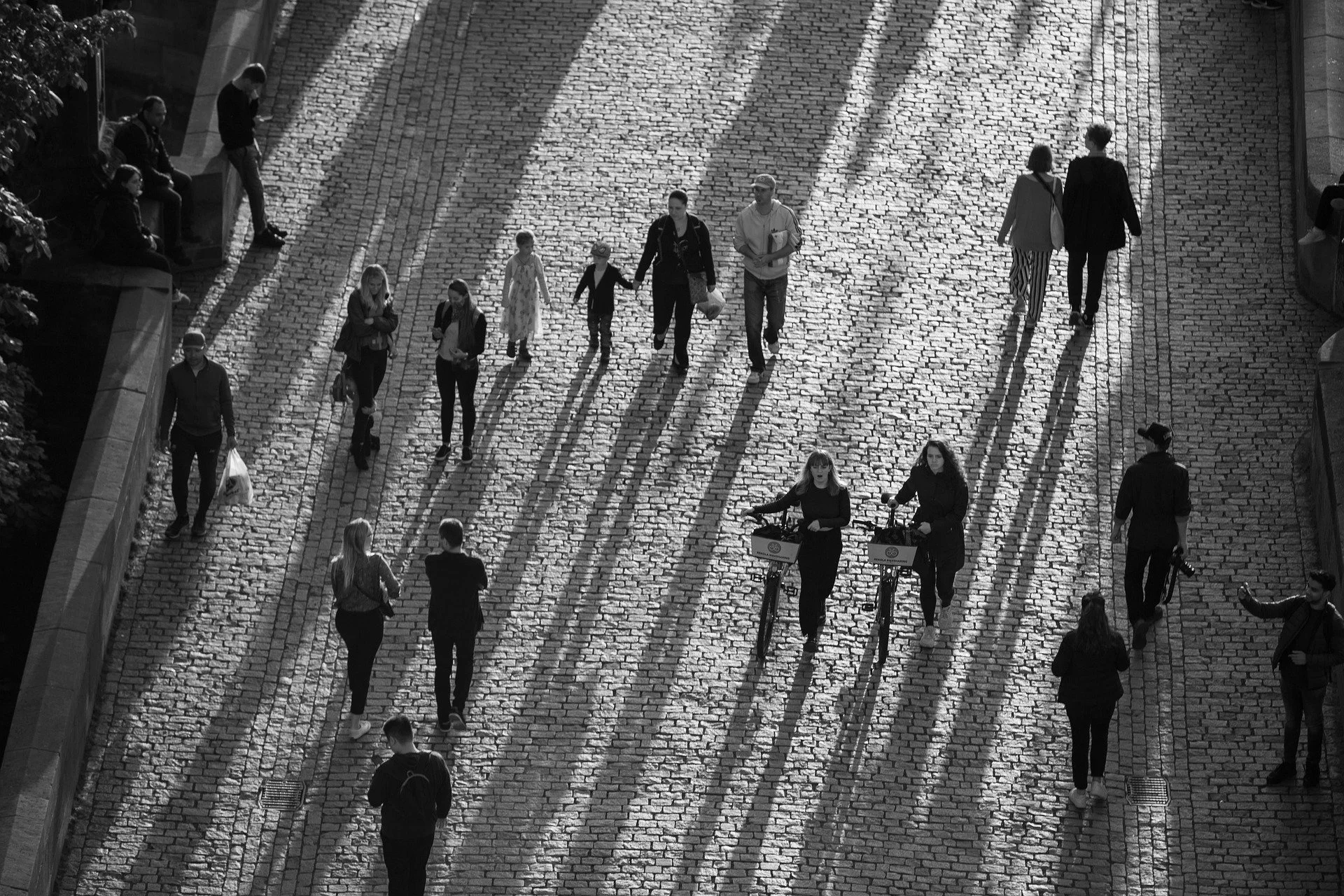
Why I walk (and what that says about AI)
Also published on my Substack, Wombat Safari
When the world became automated
A little over a year ago, a senior IT executive returned from a trip to the United States, where he witnessed a demonstration of Microsoft’s new Copilot system. Over coffee, he described how he watched AI breeze through a clogged executive inbox—categorising, prioritising, responding, and executing in seconds what would have taken him half a day. It was swift, confident, and eerily competent.
“I keep being told that AI will free people to do more complex, creative, and imaginative work,” he said, eyebrows raised. “But what exactly are they going to be doing?”
He wasn’t joking. He was asking, with genuine unease, what human beings would do in a world where machines could do nearly everything better.
Since then, AI has become an integral part of our daily lives with the soft inevitability of a tide. It drafts our emails, recommends our reading, whispers scheduling suggestions, tidies our documents, and even presents us with plausible art and eerily lifelike faces and voices. It has become less a tool we reach for than an environment we inhabit.
Sometimes I feel we are surrendering to it like a small country becomes reliant on a larger one—quietly, gradually, unconsciously.
In a world where AI can generate poems, drive cars, simulate friendships, optimise processes, and anticipate needs, I return to the IT executive’s simple question: What is left for us to do?
I walk
When I need to think, I go for a walk.
Not to get somewhere. Not to monitor my steps. I walk as one might breathe deeply or stretch after a sleep. I walk to feel the weather on my skin and to let my thoughts rise and fall with the rhythm of my stride.
Often, I find myself distracted by bark or clouds, or the tilt of a magpie’s head. These little interruptions aren’t intrusions; they are the point. As I am drawn outward, my thoughts settle inward. Problems unknot themselves. Ideas emerge sideways, like ferns uncurling.
On a recent walk, as I mulled over what humans might do in a future governed by artificial intelligence, I decided that AI can’t walk for me.
It may sound almost absurd to say aloud, however, in a world shaped by automation, the body’s stubborn refusal to be outsourced starts to feel like a quiet act of resistance.
We live in an age that mistrusts stillness. Activity—any activity, no matter how pointless—is regarded as a marker of value. The idler is viewed with suspicion. The wanderer is seen as unproductive. And yet, as philosopher John Gray reminds us:
“Nothing is more alien to the present age than idleness… In thinking so highly of work we are aberrant. Few other cultures have ever done so.”
As AI advances to free us from toil, do we find ourselves unprepared for the freedom it brings?
We’re not used to being untasked. We don’t know what to do with ourselves when the doing is done.
So, I walk.
What’s left for us?
In the language of business consulting, many of us were once proud to be “Completer Finishers”—people who tidied the details, closed the loops, and turned ideas into action. These roles provided structure to our days and dignity to our work. But now, AI completes and finishes with more polish, greater speed, and no coffee breaks.
What remains?
We tend to believe that creativity, empathy, and intuition are fundamentally human traits. Yet, even in these domains, AI is making its presence felt, generating music, simulating empathy, and composing images that evoke emotions. It is efficient. It is eerie. And yet, it lacks the one thing we often take for granted: a body.
AI doesn’t stroll through a field and feel its knees ache. It doesn’t step into the sunlight and sneeze. It doesn’t stand on top of a mountain and experience overwhelming wonder and vertigo.
There’s a kind of knowledge that comes only from moving slowly through the world. It’s not factual or analytical. It’s lived.
Clarisse McClellan explains this effect to Montag in Ray Bradbury’s Fahrenheit 451:
‘I sometimes think drivers don’t know what grass is, or flowers, because they never see them slowly. If you show a driver a green blur, Oh yes! He’d say, that’s grass! A pink blur? That’s a rose-garden! White blurs are houses. Brown blurs are cows. My uncle drove slowly on a highway once. He drove forty miles an hour, and they jailed him for two days. Isn’t that funny, and sad.’
The fantasy of anticipation
Tech futurists often speak of AI as a kind of oracle. They promise a future where machines will “anticipate our needs before we know them.” These visions are presented with TED-talk urgency and the evangelical fervour of conversion.
But I don’t want my needs to be anticipated. I want to discover them slowly, preferably near a bakery.
One of the quiet joys of being human is not knowing what you want until something surprises you. I might start a walk wondering what I would like for dinner, only to find myself lost in thought about whether kangaroos, given the right evolutionary push, could learn to use tools.
That’s not a path AI can follow. AI doesn’t drift, doesn’t digress, nor bump into an old friend or forget what it was meant to be doing.
It doesn’t wander in circles and arrive somewhere new.
The danger of thinking less
A recent study on generative AI highlights a phenomenon known as metacognitive laziness, which refers to a decline in our ability to think critically and plan effectively. It is a form of cognitive load-shedding, where we favour convenience and efficiency over committing to the more challenging tasks of independent thinking and learning.
AI helps us complete tasks faster. But that speed may come at the expense of reflection. As we lean on machines to answer questions, we risk weakening the muscles we need for deeper learning: planning, evaluating, and adjusting. We lose the habit of striving for insight. We forget what it feels like to be bewildered—and to keep pushing forward regardless.
Without this inner effort, creativity turns into mimicry. Innovation becomes rearrangement. We skim the surface but forget how to dive.
Walking reminds us how to dive. Not all at once, but gently. It allows the mind to descend through layers of thought. It reintroduces us to patience, to attention, and to the slow unfolding of insight.
The grace (and awkwardness) of human gait
There is something profoundly personal about the way people walk. I watch people walking on our street. One woman walks as if she’s trying to shake off her hips. A mother and son stride out daily in pursuit of better health, while an old man shuffles along with his old dog in peaceful companionship. A young athlete glides with extraordinary casual grace, like a dancer caught walking. I’ve been told I stride, but I prefer to view it as purposeful contemplation.
Walking is messy. It involves breath, boredom, sweat, balance, blisters, and obstacles. No two people do it the same way.
AI can imitate emotion, create beauty, and even write this sort of essay. However, it can't stroll down a path and suddenly stop, gripped by the memory of a childhood scent. It can't see a cloud and laugh because it resembles a goat. It can't be taken aback by what it remembers. It can't regret its words and actions and try to be better.
That’s the difference. AI knows about the world, but I’m part of it.
And as I walk, I'm reminded that I'm a physical being made of cells, muscles, and breath. I wonder, question, and remember. I may forget what I’m meant to do, but I always recall who I am.
If you’re going nowhere, you’re probably getting somewhere
About forty minutes into my walk, a moment arrives when the chatter starts to fade. The unanswered emails, unread news, and forgotten messages feel less pressing. My thoughts slow down, and my perspective broadens. Occasionally, if I’m lucky, I find myself thinking of nothing at all.
That sort of quiet is becoming rare.
AI can write faster, think faster, and finish tasks. But it cannot wander. It cannot daydream. It cannot stray from the path and return with something new.
That’s where the good stuff lives. Not in answers, but in detours. In the half-formed thoughts. In the rhythm of a walk that goes nowhere and somehow, along the way, finds everything.
“A man is not idle because he is absorbed in thought. There is visible labor and there is invisible labor.” Victor Hugo
Footsteps, not data
AI is in our inboxes, cars, fridges, and phones. It shapes our work and words. However, it cannot walk for us.
Walking is where we remember what thinking feels like. It is where we step out of the current and return to ourselves. It is where the digital ends and the human begins.
So, just walk.
Walk at a leisurely pace. Stroll aimlessly. Walk to reconnect with the world beyond the algorithm. Walk to rediscover your body. Walk to experience the breeze and let go of your schedule.
In a future shaped by AI, one of the most human things we might do is put one foot in front of the other.
