On Shank’s Pony
Walking, words, and the freedom of going by foot
Also published on my Substack, Wombat Safari
In Jane Austen’s novels, walking is never just a scenic interlude. The reasons a character walks, how they walk, and their destination always reveal something deeper about growth, choice, change, and the relationships they form. Walking is plot, personality, and philosophy made visible.
In Pride and Prejudice, Elizabeth Bennet’s decision to walk unaccompanied to Netherfield to look after her sick sister showcases her independence, practicality, and defiance of societal norms. Her walk—nearly a Parkrun in distance—tells the reader who she is and what she believes:
“No, indeed. I do not wish to avoid the walk. The distance is nothing when one has a motive; only three miles. I shall be back by dinner.”
In this moment, Elizabeth is not just covering ground; she is crossing a boundary of social expectation.
Austen wrote during a time when walking was essential for many. It was the primary means of moving, connecting, and engaging with society. In contrast, today's movement is predominantly mechanised, facilitated by cars, buses, trains, and planes.
Today, walking somewhere under your own steam can seem quaint or inefficient. Yet paradoxically, walking for leisure has surged. What was once a necessity has become a pursuit.
Words in motion
As walking has transformed from an everyday act to a carefully curated leisure activity, so too has the language used to describe it.
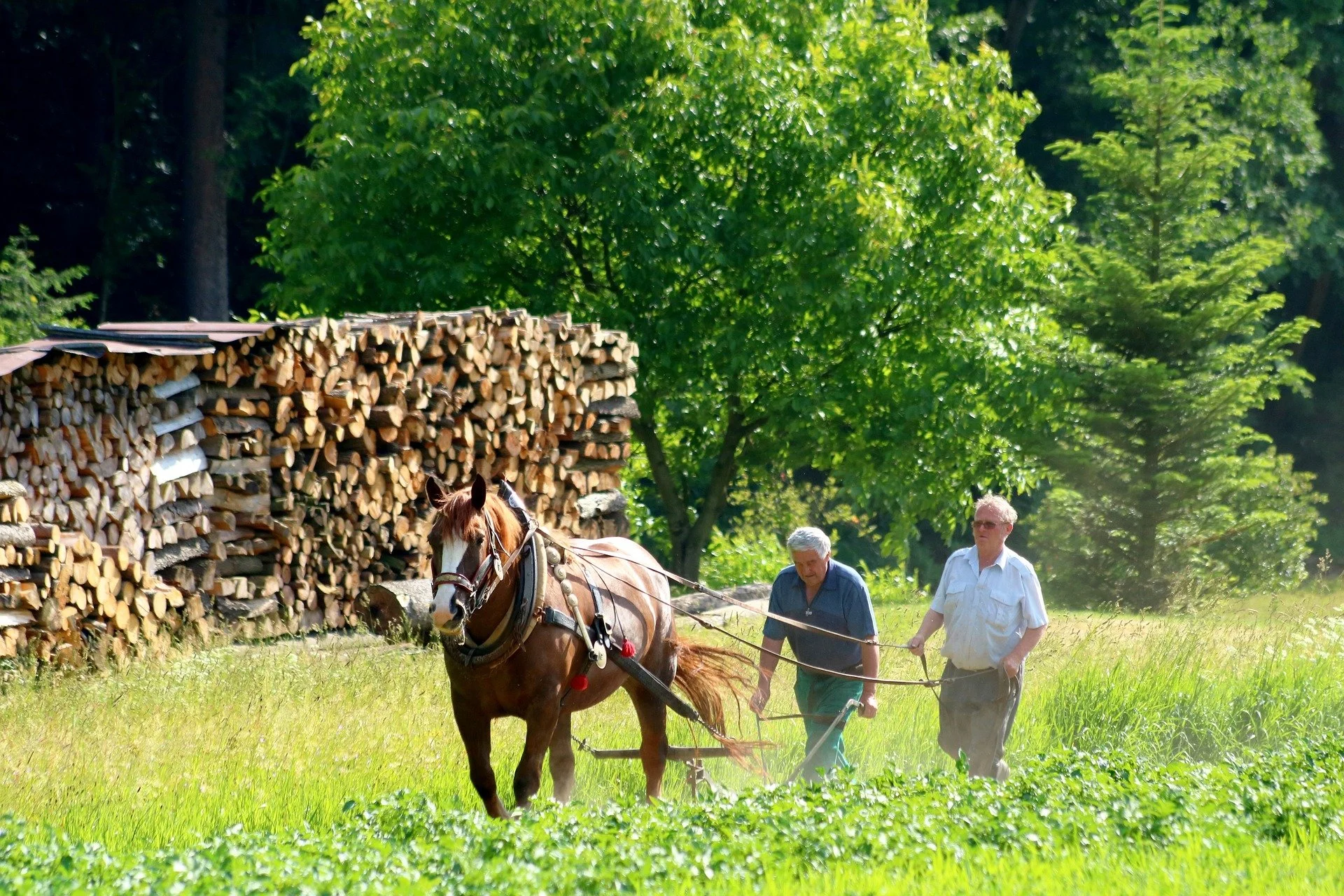
When I was younger, people still said they needed to “hoof it”—usually when they were running late and had to get moving. “Legging it” hinted at the need to get away, perhaps from trouble or embarrassment. And “Shank’s pony”—an expression probably familiar to my grandfather—meant walking as a last resort:
The car broke down five miles from town, so we had to get there on Shank’s pony.
These phrases capture more than just movement; they embody purpose, emotion, and social context. Shank’s pony evokes a time when walking was the only transport available.
As Morris Marples writes in Shank’s Pony: A Study of Walking, the Shank’s pony reflects a class distinction.
In his introduction, Marples suggests that 300 years ago, those who could afford to ride looked down on pedestrians and came to dislike walking themselves.
The pedestrian, for his part, no doubt envied the rider, and felt sorry for himself; but, having a sturdy independence and a sense of humour, he made light of his inferior situation, and invented the slang expression “Shank’s Mare or “Shanks Pony to restore the balance…
These phrases reflect a reality that, for most of human history, walking wasn’t a lifestyle choice. It was simply a matter of how people got from one place to another.
The disappearing body
This shift in language reflects a broader cultural change. As George Lakoff and Mark Johnson argue in Metaphors We Live By, our conceptual systems are rooted in bodily experience:
The concepts that govern our thoughts… also govern our everyday functioning. Our concepts structure how we perceive, how we get around in the world, and how we relate to people.
When we say “grab an Uber,” “hop on a train,” or “jump in the car,” the body all but disappears. These phrases signal convenience and speed, but they also abstract us from our physical presence. We no longer move; we are being moved. The world is no longer walked but skimmed, bypassed.
This mechanisation of movement has consequences. Philosopher Michel de Certeau described walking as a spatial practice through which individuals write themselves into the world. To walk, in this sense, is not only to move but to mean something. The loss of walking, then, is not just physical; it changes what we notice, what we learn, and how we engage with the world around us.
Traces in the language
The phrases for walking, “Shank’s pony,” “hoof it,” and “leather express,” are language fossils from a more physical world.
“Getting on the shoelace express” seems like a contemporary twist on Shank’s pony. "On a mission" may have been the favoured phrase in the 1990s, which evolved in the faster-paced 2000s into “on a mish.” Walking becomes a shared experience with mates rather than an activity with intent or purpose.
Slowness and status
Frédéric Gros, in A Philosophy of Walking, writes that walking imposes slowness—and with it, a different relationship with time:
It is a luxury to be able to walk, a privilege to be able to afford slowness.
This is a remarkable turnaround. Today, walking, which was once viewed as a sign of lower means, has once again transformed into a symbol of status through achievement or competition.
For example, the Montane Winter Spine Race is known as Britain's toughest endurance race. Competitors navigate 426 km along the Pennine Way in winter conditions. For many participants, the personal challenge is the main attraction. In 2024, 550 competitors started the race. Not everyone finishes. Most aren’t competing to win but are instead challenging themselves, and walking is the entry ticket.
The commuter doesn’t walk because they can’t spare the hour; the flâneur does so because they can.
In a culture driven by speed and frictionless navigation, Shank’s pony reminds us that the pace of the human body was once the measure of the world.
Attention and embodiment
What do we lose when we no longer go by foot?
Not just exercise or fresh air, but a way of being in and with the world. Walking slows us down and opens us up. Our thoughts stretch out. Our senses sharpen. We look differently.
Henry David Thoreau saw walking as a kind of crusade—an act of independence and contemplation. It fosters clarity not through thinking alone but through rhythmic, bilateral movement. It is unprogrammed, unscripted, alive.
Memory and metaphor
Language preserves what culture forgets. Perhaps it’s time to reclaim our walking words and phrases as reminders of a different mode of attention and presence. To “hoof it,” “leg it,” or ride “Shank’s pony” is to acknowledge that we are creatures with legs, with limits, with time to feel the distance between places.
It’s also worth remembering that walking is not a lesser way of moving, but a human way.
