Our walking words
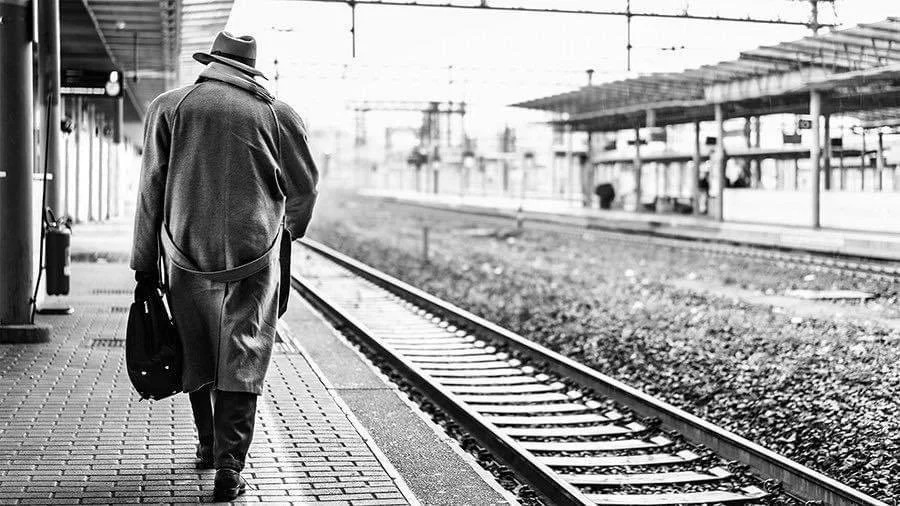
What does the language of walking reveal about walking and us?
Also published on my Substack, Wombat Safari
We don’t just walk. We amble, stride, trudge, shuffle, and plod.
We tiptoe through fear and march with conviction. We wander when we’re lost in thought and prowl when we wish to remain unseen. Our language has dozens of words for walking, each one carrying its unique pace, mood, and purpose. Walking is not just movement; it’s meaning in motion.
How we walk, or how we think about walking, reveals how we think, feel, and make sense of the world.
Why so many words for walking?
We can categorise the way we walk by speed, intent, mood, and metaphor. (This is an indicative, not exhaustive, list.)
By speed: amble, stroll, march, scurry, dawdle, dash
By intent: trek, patrol, wander, pilgrimage, commute
By mood: trudge, glide, stagger, tiptoe, pace
By metaphor: journey, path, step, navigate, move forward
The basic act of walking remains unchanged; however, the words reveal intent, emotion, and context. When someone ambles, we picture leisure. When they trudge, we sense their burden. A pilgrimage is a form of walking that emphasises the significance of both the journey and the destination.
In the charming manner of lexicographers, walking is also a constant and repetitive action:
We move at a steady pace, lifting and setting down each foot in turn, never having both feet off the ground at the same time.
However, walking can be solitary or communal, urgent or aimless, joyful or sorrowful. It can be pragmatic, poetic, political, or sacred. Walking is an endlessly flexible and meaningful action that we often take for granted.
Watching people walk
We all engage in people-watching.
Whether deliberately, casually, or unconsciously, we observe the movement of the crowd. Our focus drifts from one figure to the next, sometimes pausing on the tilt of a head, the flick of a gaze, a waving hand, or a furtive touch. From these subtle cues, we infer feelings, relationships, and motives. We read the unspoken language of gestures and presence.
We also watch how people walk.
A person’s gait can convey their emotions, even when their facial expression doesn’t. Some walk with confidence and purpose, while others shuffle by wearily. Some stroll, while others pace off their frustration or anxiety. Our emotions aren’t just expressed in words; they’re also reflected in how we walk.
Actors know this. A character’s walk can speak more than their words. Gait, posture, and rhythm are not just physical details; they are expressive tools that reveal mood, intention, history, and emotion.
Laurence Olivier famously said he found his characters “from the outside in,” often beginning with a walk. His hobbled, crooked stride as Richard III became a defining feature of the character’s malevolence.
In Lincoln, Daniel Day-Lewis, known for his total immersion into roles, spent months perfecting Abraham Lincoln’s distinctive, shuffling gait—using physical movement to suggest both frailty and quiet authority.
Meryl Streep, too, shapes her characters through physical observation, crafting walks that reflect not only status and age but also psychological nuance. In The Iron Lady, Margaret Thatcher’s gait subtly shifts as the character ages and unravels.
This physical aspect of performance has long been recognised in actor training. Michael Chekhov emphasised ‘psychological gesture’ as the way for a character’s internal want or need to become an external gesture.
Uta Hagen, in Respect for Acting, urged actors to develop “character walks” as a way to embody different personalities and social worlds.
Even a trap set for us over and over again by the play-wright or the director—“He wanders restlessly”—does not have to lead to the usual cliché of mechanical, tense, and general stage wandering. Each movement of true wandering as destination, is focused on a relevant object that we deal with in order to further the character and the story.
On screen, a character’s walk can define them before any words are spoken or after words have misled us. A walk is a silent form of storytelling: an expression of mood, identity, intent, and transformation.
John Wayne’s slow, swaggering became a cinematic shorthand for rugged individualism and frontier authority. His walk declared who his character was before he ever spoke.
Arnold Schwarzenegger’s deliberate, methodical, and unstoppable stride conveyed the Terminator’s programmed inevitability. Its relentless movement displayed no mercy or emotion.
Uma Thurman’s blood-streaked, deliberate gait in Kill Bill signals not just survival but vengeance. In The Matrix, Neo’s post-awakening calm, centred, weightless walk showed us Neo’s shift from fear to mastery.
Other walks have flair. John Travolta’s swaggering strut in Saturday Night Fever radiates youthful confidence. Brad Pitt’s Tyler Durden in Fight Club bounces with chaotic charisma. In Aliens, Ellen Ripley marches in a power loader towards the Alien Queen with a stride that exudes maternal strength.
Then there are the unforgettable reveals.
In The Usual Suspects, Kevin Spacey’s character, Verbal Kint, hobbles through most of the film with a crooked gait, visually reinforcing his supposed weakness and innocence. But in the final moments, as he walks away from the police station, the limp disappears. His posture straightens, his steps become smooth and self-assured. In that single transformation, the truth is revealed through his changing gait. We have all been fooled. The walk becomes the twist.
Walking is more than just a means of getting from A to B. It is a language that represents who we are and a gateway to our thoughts.
Walking as resistance and reconnection
In a culture that values speed, efficiency, and disembodied convenience, walking is a quiet act of resistance.
Walking serves as an antidote for those struggling with burnout and anxiety. It helps restore perspective and proportion. It reorients us, both physically and emotionally, placing the world back into human scale.
As Rebecca Solnit writes in Wanderlust,:
Walking articulates both physical and mental freedom.
Our bodies and minds are entangled, and the simple act of walking is a way to assert autonomy and ground our thoughts.
