Our history and future in footsteps
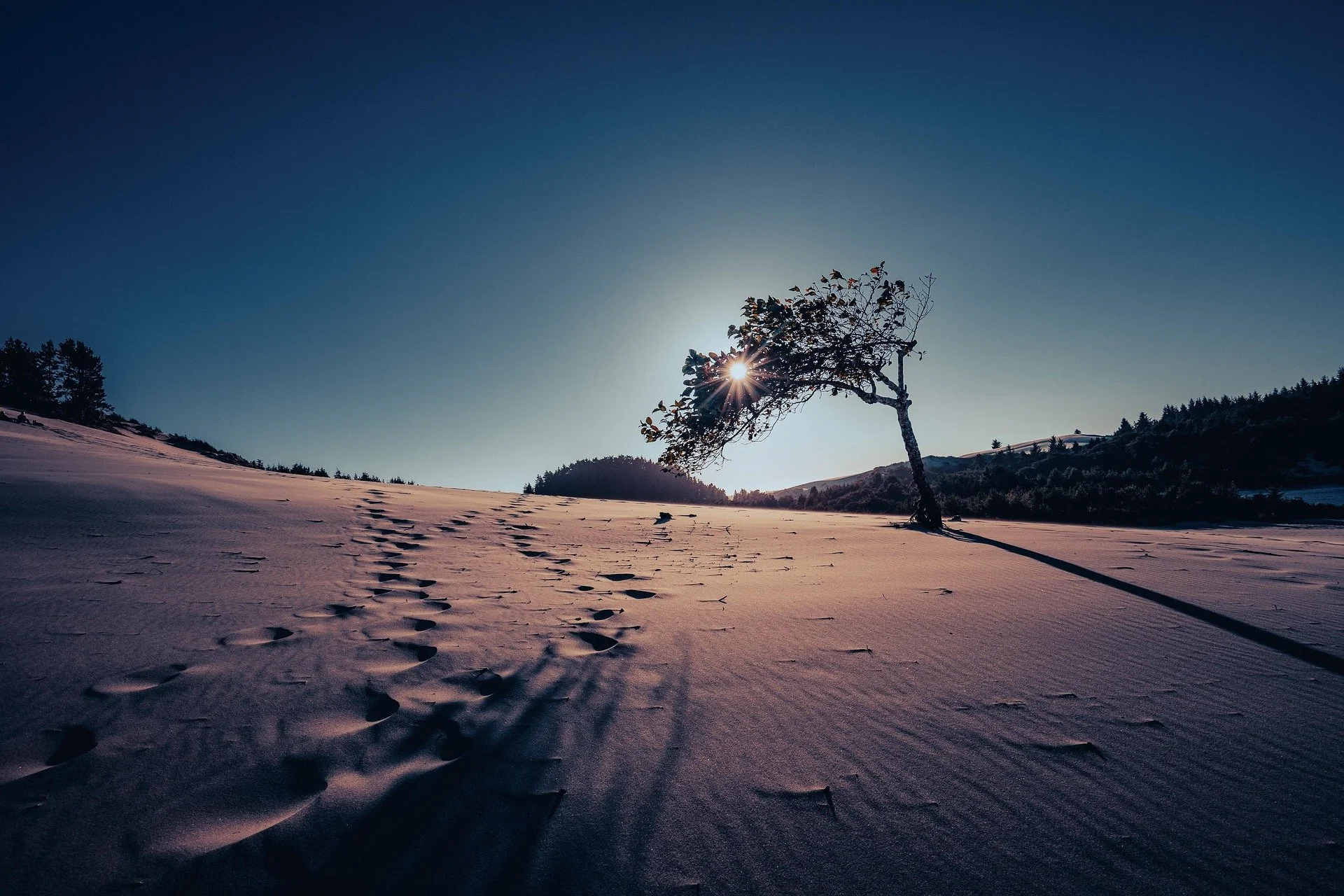
Through the movement of the elderly, we catch a glimpse of their past and our future.
First published on Substack.
Walking and running each have unique gait signatures—movement patterns that are as individual as a person’s voice or handwriting. These signatures develop early in life and are continually updated as we grow from toddlers to adolescents and adults, then gradually decline with age.
Motor memories, like gait signatures, are among our most enduring forms of learning, persisting for decades without practice. For example, someone who hasn’t ridden a bike in forty years might find it difficult, but with a few attempts, they can relearn the pattern because the mind and body remember it.
However, the neural pathways responsible for movement persist even after the body can no longer perform them. You recall how it felt to walk—entering a room confidently, rushing upstairs two at a time, or moving through familiar dark spaces without fear. Although the music of movement remains visible, it cannot be performed with the same skill as before.
Sarcopenia—the loss of muscle mass—begins in our 40s and speeds up after our 60s. The systems that control balance and spatial awareness decline. Proprioception, which is the body’s sense of its position in space, becomes less accurate. Neural processing slows down, making tasks that used to be automatic now require conscious effort. These tasks include micro-adjustments for walking on uneven surfaces and quick recalibrations when weight shifts unexpectedly. As a result, stride length shortens, the base of support widens for stability, the arms stop their natural swinging motion, and gait becomes more cautious.
Philip Roth illustrates this in his novel Everyman, which follows a character’s gradual decline as his failing body parts—hips, knees, spine—turn walking into a struggle rather than effortless freedom.
The physician Atul Gawande, in Being Mortal, writes about the “modern experience of mortality about what it’s like to be creatures who age and die, how medicine has changed the experience and how it hasn’t…”. The book draws heavily on Gawande’s experiences as a surgeon caring for people facing serious illness, aging, and end-of-life decisions.
He describes their fear as “what happens short of death—losing their hearing, their memory, their closest friends, their way of life.” This characterises the journey to very old age, which can seem like “a continuous series of losses,” making decline more intimidating than the final moment.
Gawande explains that for an older adult who is otherwise doing “impressively well,” the greatest threat may not be cancer or pain, but falling, because it can suddenly alter a person’s life path. A fall can quickly lead to loss of independence, disability, institutionalisation, and a significant decline in quality of life.
To fall is to be betrayed by a body that, for seven or eight decades, has operated with such reliability you forget it is there. Walking, which began as an achievement welcomed with applause when a toddler, is no longer an achievement but a problem.
Needing a cane or walker for the first time holds symbolic meaning. It’s not just a tool; it clearly indicates decline. It openly admits that you can no longer depend on your body to perform its natural functions. Although the shift from independence to dependence may seem like a clear moment, it masks that it is a slow, gradual process that develops over time and is barely noticeable each day.
Perhaps, in old age, each step taken today becomes a memory of all previous steps. The careful, deliberate placement of a foot on the pavement reflects decades of walking—the hikes, nervous pacing, and casual strolls. Memory retains these movement patterns, influencing the current stride, even if the movement is less fluid than it once was.
Walking in old age is a movement rich with memory. Unlike running, which demands focus on the immediate future, or sitting, which is static, walking slowly creates space for reflection on the body’s accumulated history. You can’t help but think about the fact that you’re walking. It’s no longer automatic, and as a result, memories flood in.
There is grief in reduced mobility and real loss. Yet, moving slowly and carefully, fully aware of the body’s vulnerability, allows us to connect with our past. Whether it’s the fourteen-year-old running with mates, a parent walking with curious children, or a couple strolling in retirement, these patterns are woven into each step. Our history is mirrored in our gait. Only when our stride slows enough to observe can we truly feel the weight we’ve carried all along.
We carry the memory of every step we’ve ever taken. When we’re young, this memory is so light it almost feels absent. As we grow older, it becomes part of how we walk—heavier, unavoidable, and strangely beautiful.
The body might betray us, but it also remembers. In that memory, even when weakened, it stays faithful to everything it has experienced.
We live in an ageist society obsessed with youth. The older we get, the more invisible we become. But through the movement of the elderly, we catch a glimpse of their past and our future.
My essays on movement and meaning are first published on Substack.
To receive them directly in your inbox upon publication, please subscribe.
